Keeping a manufacturing facility running efficiently takes more than production machinery. From moving raw materials onto the factory floor to organising tools at assembly stations and handling finished goods, everyday workplace equipment plays an important role in keeping operations moving.
The right workplace equipment can make these everyday tasks more efficient and help create a safer, more organised working environment. However, the best solution is not necessarily the largest or strongest option. Equipment should be selected according to the task, load, frequency of use, available space and conditions in which it will operate.
With more than 140 years of industry experience, PARRS supplies professional material handling, access, lifting, storage and workplace equipment to businesses across the UK. This guide looks at some of the equipment commonly used in manufacturing and, importantly, what to consider when choosing it.
Choosing the Right Equipment for Manufacturing
Equipment requirements can vary considerably between manufacturing environments. A high-volume production line may depend on reliable material handling throughout the day, while a smaller engineering workshop might prioritise adaptable workstations, organised storage and safe access to machinery.
Before choosing equipment, consider:
- The task: What will the equipment be used for?
- The load: What weight, size and type of materials will it handle?
- The working environment: Consider floor surfaces, available space, moisture and other site conditions.
- Frequency of use: Equipment for continuous or repetitive tasks may benefit from powered or more specialised solutions.
- Access and storage: Think about where equipment will be used and where it will be kept when not required.
Quality and price matter, but they shouldn’t be the only deciding factors. The equipment needs to work for the way your manufacturing facility actually operates.
1. Pallet Trucks – Everyday Pallet Handling
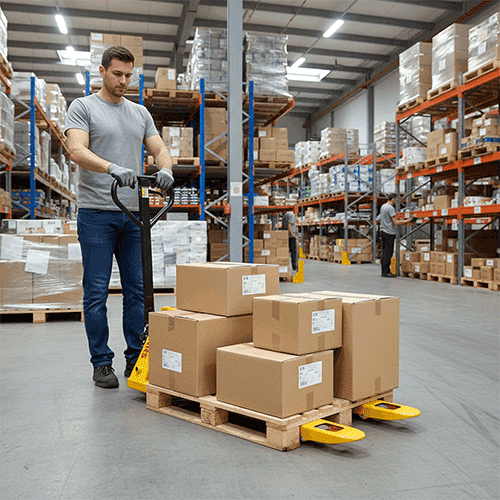
From incoming deliveries to finished goods ready for dispatch, pallet trucks help keep materials moving between key areas of a manufacturing facility. They are particularly useful for transporting palletised components, raw materials and completed products without relying on larger handling equipment for every movement.
Pallet trucks are available from 1,000kg to 5,000kg, with manual and electric options, different wheel materials and single or double rollers.
Standard pallet trucks are suitable for Euro/CHEP pallets on flat floors and shorter routes. Weigh-scale pallet trucks combine handling with weighing, which can be useful for dispatch and inventory checks. Electric pallet trucks provide powered travel and lifting for higher-volume work, heavier loads and longer routes.
Wide and long pallet trucks are designed for oversized pallets, skids and longer loads, while low-profile models, with fork heights of around 55–65mm, suit low-clearance pallets and specialist skids. High-lift pallet trucks can raise pallets to a more convenient working height for packing or assembly. Quick-lift models reduce the number of pump strokes needed for suitable lighter loads. Rough-terrain pallet trucks use pneumatic tyres for uneven or unpaved surfaces, while galvanised steel models are suited to moisture or demanding cleaning conditions.
Best choice: Manufacturing facilities moving palletised materials regularly.
Before buying: Consider pallet type, load weight, route length, floor conditions and whether powered travel or lifting is required.
2. Adjustable Workbenches – Flexible Manufacturing Workstations
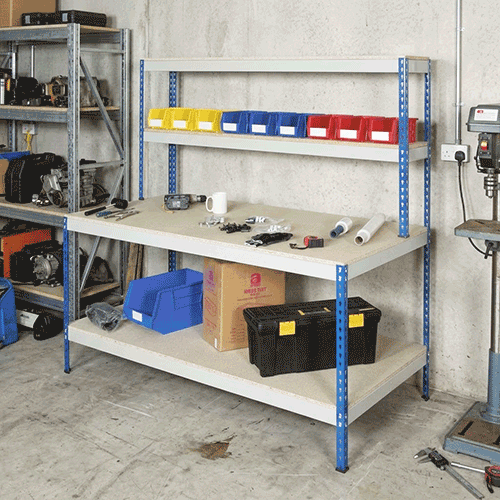
Manufacturing workstations need to accommodate different tasks, from precision assembly and inspection to packing and repairs. Adjustable workbenches allow teams to set up a working surface suited to the activity, with height-adjustable options supporting both seated and standing work
PARRS supplies ANCO workbenches used in automotive, electronics, aerospace and workshop environments. They feature powder-coated steel frames and 18mm worktops. Static benches can support up to 600kg total UDL, with individual shelves supporting up to 400kg depending on configuration. Mobile versions use heavy-duty swivel castors with locking brakes.
Best choice: Assembly, inspection, packing, repair and production workstations.
Before buying: Consider working height, bench size, load requirements, mobility and the type of work being carried out.
3. Racking & Shelving – Storage Solutions for Busy Factories
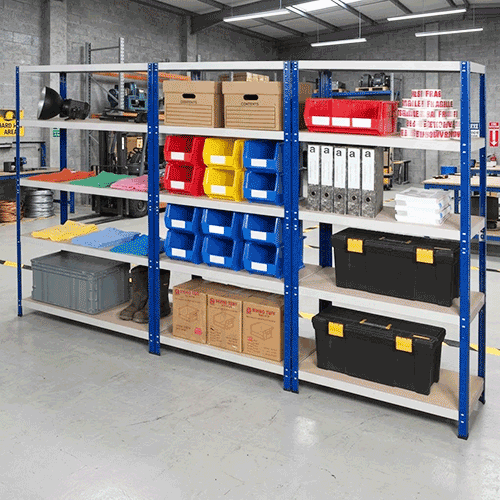
Well-planned storage helps manufacturing teams keep materials, components and tools organised and accessible. Whether storing incoming stock, work-in-progress or finished products, choosing the right racking and shelving can make better use of available space and simplify stock handling.
Pallet racking is suitable for palletised materials, while cantilever racking provides storage for longer items such as steel bars, pipes, aluminium profiles and timber. Industrial shelving can organise tooling, moulds, dies and mechanical components. Louvred panels and storage bins are useful for smaller parts, while chrome wire shelving can be a good option where visibility and airflow are important.
Best choice: Manufacturing facilities that need structured storage for materials, components, tools and finished goods.
Before buying: Consider the items being stored, their dimensions and weight, access frequency, available space and future storage needs.
4. Steel and Plastic Tray Trolleys – Moving Components Around Production Areas
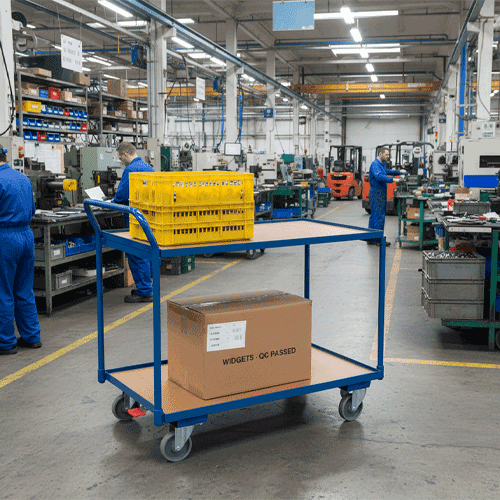
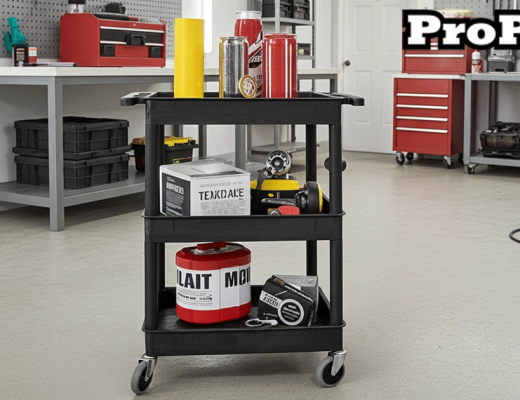
Tray trolleys offer a practical way to transport and organise smaller loads. They can be particularly useful in assembly, inspection and production areas where components need to remain accessible throughout the manufacturing process.
Steel tray trolleys are suited to heavier-duty environments such as automotive, aerospace and machining. Plastic models are lighter and can be useful in electronics, pharmaceutical, food and beverage manufacturing where manoeuvrability and moisture resistance matter. Deep-lip trays can help contain minor spills, while multi-tier designs allow different items to be transported together.
Best choice: Moving parts, tools and products between workstations and production areas.
Before buying: Check tray dimensions, load capacity, mobility and the conditions in which the trolley will be used.
5. Dollies – Simple Movement for Awkward Loads
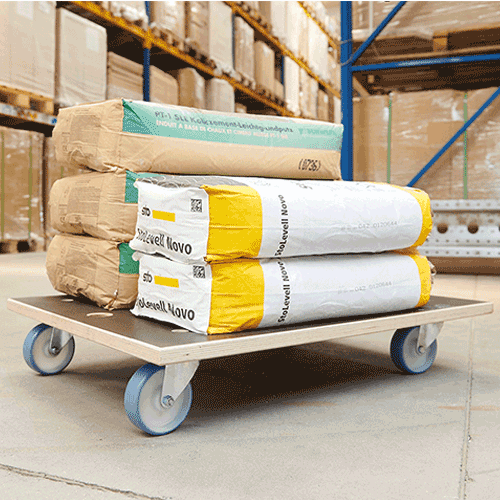
Dollies provide a compact handling option for moving items such as crates, subassemblies and awkward components over suitable floor surfaces.
Wooden dollies can be suitable for sensitive components and heavy-duty loads up to 1,000kg. Steel versions provide robust support for heavier industrial loads, while plastic dollies are lightweight and useful for crates, bins and components, particularly where moisture resistance is helpful. Swivel castors make loads easier to manoeuvre, with brakes or total-lock castors available where required.
Best choice: Moving smaller or awkward loads around manufacturing facilities.
Before buying: Consider load weight, platform size, floor conditions, castor type and how frequently the dolly will be moved.
6. Mobile Steps – Practical Access for Manufacturing Areas
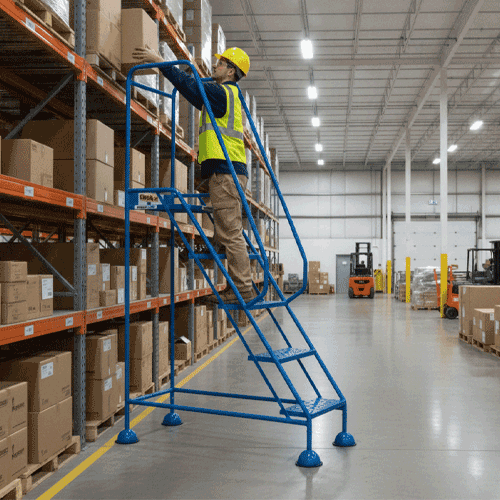
Access requirements can change throughout a manufacturing facility, particularly where teams need to reach stored materials, inspect equipment or carry out maintenance. Mobile steps offer a repositionable access solution for suitable tasks where permanent access equipment is not required.
PARRS supplies steel and aluminium mobile steps from 2 to 17 treads, with platform heights up to 4,064mm. Brands include CLIMB-IT, REDHILL, and KLIME-EZEE, with different models available to suit a range of working environments. Depending on the model, features can include different handrail configurations, domed feet, security locks and safety gates.
Tread choice depends on the manufacturing environment. Anti-slip treads provide additional grip, punched steel offers a durable industrial surface, ribbed rubber provides raised grip for regular access, and PVC is a practical, easy-to-maintain option.
Best choice: Manufacturing facilities requiring movable access to elevated work areas.
Before buying: Match the height, SWL, number of treads, footprint, tread surface and safety features to the task and working environment. Check that the mobile steps meet the relevant safety standards and certification requirements for the intended application and working-at-height tasks.
7. Shadow Boards – Keep Tools Visible, Accessible and Organised
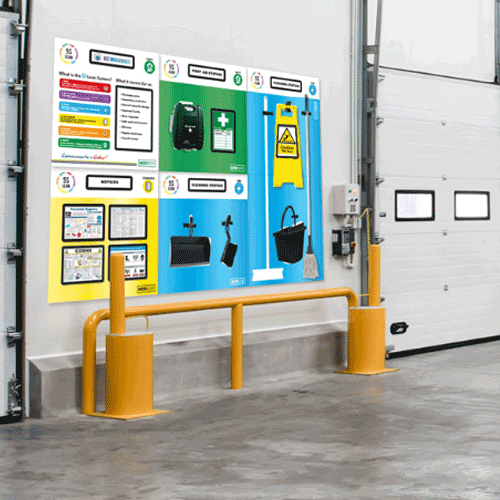
In busy manufacturing environments, knowing where essential tools and cleaning equipment belong can make everyday tasks easier to manage. Shadow boards provide designated storage positions, making it easier to identify missing items and maintain consistent workplace organisation. They can also support 5S practices by giving equipment a clearly defined place within the working area.
PARRS supplies wall-mounted cleaning stations in a range of colours and configurations, providing a practical way to keep cleaning equipment organised and easy to access. Stations can include essentials such as brooms, shovels, dustpans and brushes, squeegees, wet-floor signs, mops and buckets.
For a more comprehensive visual workplace solution, PARRS also supplies BEAVERSWOOD ModuLean shadow board stations. The range includes dedicated stations for different workplace requirements, including the ModuLean Shadow Board Cleaning Station, ModuLean Shadow Board Eyewash/Accident Station and ModuLean Shadow Board Fire Station.
These systems can help keep essential equipment clearly organised, visible and accessible, while supporting consistent workplace standards.
Best choice: Manufacturing areas where organised tools, cleaning equipment and visual workplace standards are important.
Before buying: Consider what equipment needs to be stored, where it will be positioned and how visible and accessible it needs to be.
8. Warehouse Barriers – Protect Manufacturing Workspaces
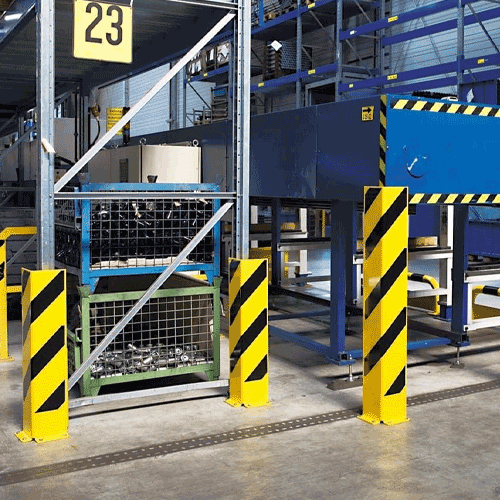
Where pedestrians, handling equipment and machinery share the same manufacturing space, protecting vulnerable areas becomes an important part of site planning. Barriers and impact protection can help define routes, separate activities and reduce the likelihood of accidental contact with racking, columns and equipment.
PARRS offers a wide range of solutions from MORAVIA, ADDGARDS, and BEAVERSWOOD. The range includes racking and column protectors, steel barriers, railings, hoop guards and corner and edge protection for different manufacturing applications.
Specialist protection is also available for areas including pallet-racking ends, warehouse columns and EV charging points. Choosing the right protection for these vulnerable areas can help limit damage to equipment and infrastructure.
These products should form part of a wider risk assessment and traffic-management plan, rather than being treated as a standalone safety measure.
Best choice: Manufacturing facilities with busy production, storage, loading and material-handling areas.
Before buying: Identify areas exposed to impact and consider site layout, handling equipment, traffic levels and appropriate fixing method.
9. Sack Trucks – Material Handling for Manufacturing
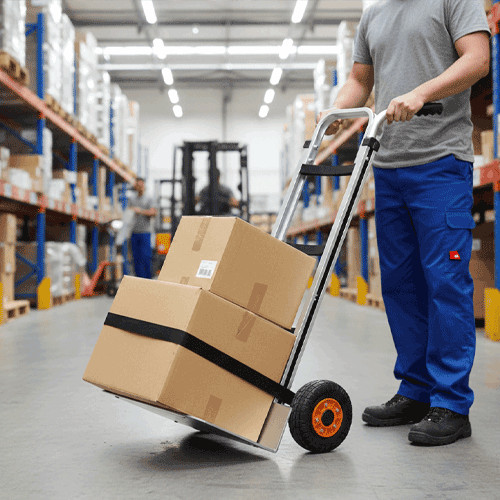
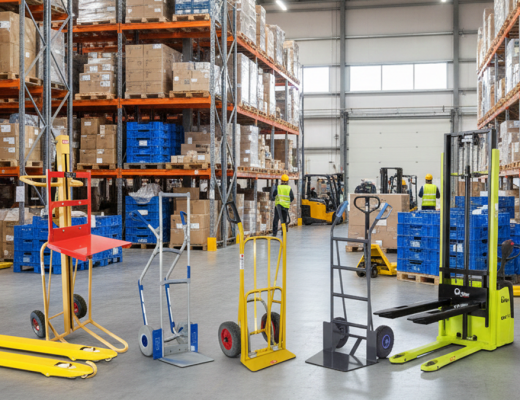
Sack trucks provide a practical option for transporting boxes, packaged components, maintenance supplies and other manageable loads around the workplace. PARRS offers a wide range from EXPRESSO, COSCO, CENTAUR, RAVENDO, REDHILL, VARIOFIT and ARMORGARD, with designs for different loads and working conditions.
Heavy-duty sack trucks, with capacities of up to 550kg, are suited to heavier industrial loads. Convertible models can switch between sack-truck and platform configurations, while folding and lightweight designs are useful where storage space is limited.
Electric models can make moving heavier loads or travelling longer distances easier, while stair-climbing designs help with movement between different floor levels. White-goods sack trucks are designed for bulky appliances, while gas-bottle trucks are designed to transport gas cylinders such as oxygen tanks, propane and acetylene. Drum trolleys are designed for moving cylindrical drums, while other specialist trucks are available for specific handling needs.
Manufacturers can also choose from different wheel, toe-plate, handle and frame configurations, including pneumatic, puncture-proof, solid rubber and nylon wheels; fixed or folding toe plates; P-handle, loop-handle and twin-handle designs; and steel or aluminium construction.
Best choice: Manufacturing facilities handling loads that require manual, powered or specialist movement.
Before buying: Consider load capacity, route, floor conditions, manoeuvrability and required truck configuration.
10. Powered Trucks and Trolleys – Powered Assistance for Repetitive Handling
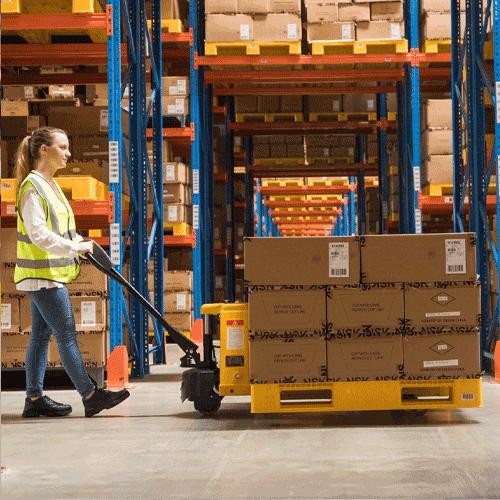
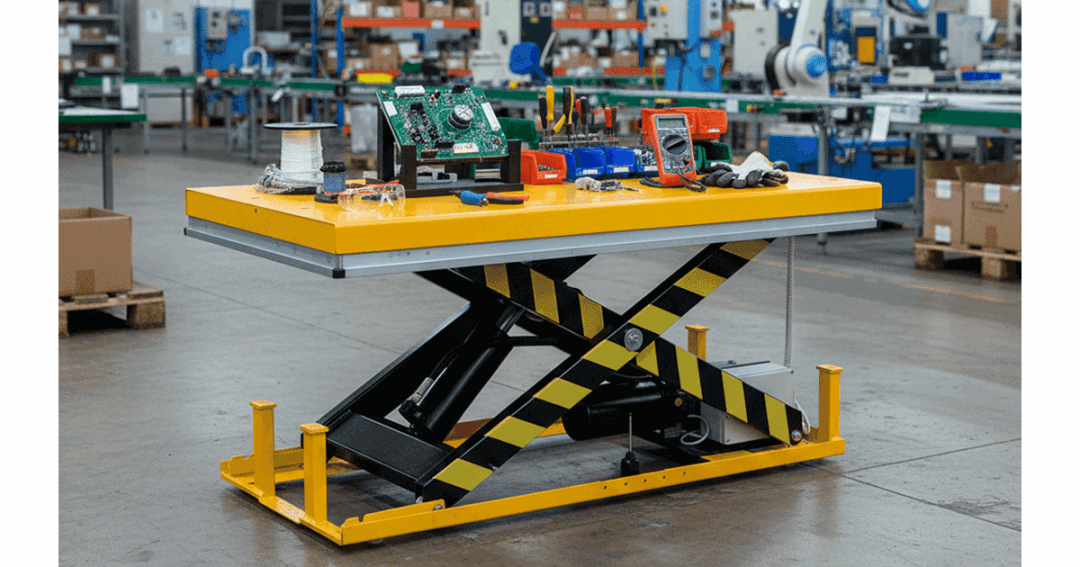
Electric-powered trucks and trolleys make moving heavier loads easier, reducing physical effort and operator strain. PARRS supplies electric sack trucks, powered pallet trucks, electric platform trolleys, electric turntable trucks, electric scissor-lift tables, electric lifters and stackers, with options for loads of up to 2,000kg.
In manufacturing, they can be used to move raw materials between goods-in and production areas, transport components between workstations, handle finished products, support loading and unloading, and move materials around warehouses and maintenance areas. Their powered operation is particularly useful where loads need to be moved over longer distances or handled frequently.
Best choice: Repetitive handling of heavier loads or movement over longer routes.
Before buying: Consider load weight, travel distance, lift requirements, battery use, charging arrangements and available operating space.
11. Platform Steps – Stable Access for Elevated Tasks
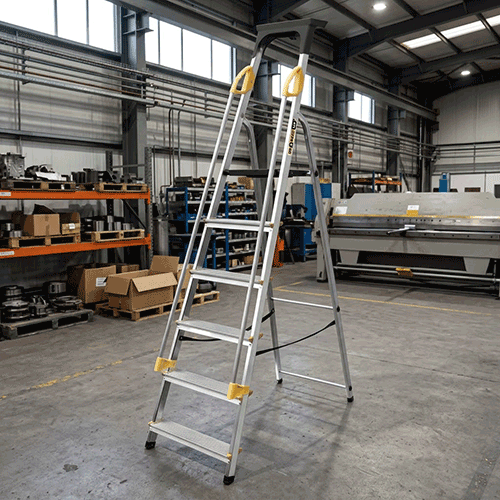
Platform steps provide a stable, elevated standing area for manufacturing tasks such as machinery inspection, maintenance, assembly and stock handling. Their larger platforms provide more standing space, while models with handrails or safety gates can offer additional support.
PARRS offers folding, industrial-grade and fibreglass platform steps, including EN 131 Professional options from brands such as DRABEST, WERNER, and CLIMB-IT. Platform heights are available up to 3,780mm, with telescopic models reaching up to 4,500mm.
The correct platform steps should be selected according to working height, task, available space and load capacity, rather than simply choosing the highest model.
Best choice: Maintenance, inspection, assembly, stock handling and other elevated tasks in manufacturing facilities.
Before buying: Check platform height and dimensions, SWL, working environment and required access features.
Why Manufacturing Businesses Choose PARRS
With over 140 years of experience supplying workplace and material handling equipment, PARRS understands the practical challenges faced by manufacturing businesses. From everyday handling and storage requirements to specialist access and lifting equipment, we help customers find products suited to their operations.
Our customers choose PARRS because they can trust us to provide:
- Reliability: Over 140 years of experience and a practical understanding of the demands of different industries, backed by dependable equipment and support.
- Quality: Carefully selected equipment and brands we can stand behind. Most products include a minimum 3-year guarantee, excluding electrical items, wheels and castors. Selected brands offer extended guarantees, including EXPRESSO and Werner up to 10 years, COSCO and RAVENDO up to 5 years, and VARIOFIT up to 12 years, where applicable.
- Safety: Equipment selected with the requirements of different applications, relevant standards and safety considerations in mind.
- Service: Free UK delivery on orders over £150, selected next-day products, bespoke solutions and free expert advice, with support before and after your purchase.
Whether you are setting up a new manufacturing facility, upgrading an existing production environment or replacing equipment, PARRS can help you find a solution suited to your requirements.
Have a question about equipment for your manufacturing operation? Speak to the PARRS team today.