Sack trucks (also known as hand trucks or sack barrows) are a sound investment for any workspace where manual handling tasks are carried out. But which type of sack truck should you choose?
There are many types, styles and designs of sack trucks, each suited to different needs and loads. The key to choosing the right sack truck is to identify the main purpose you need it to serve, which will help you narrow down the options and find the type of sack truck that best meets your requirements.
Contents
- How to choose the right sack truck
- What is a sack truck used for?
- Why is it called a sack truck?
- What types of goods does a sack truck move?
- How do you load a sack truck?
- What are the benefits of using a sack truck?
To help you along the way, we have put together our expert buyer’s guide to choosing the right sack truck. Simply work through the key points and questions below to help you decide:
How often will the sack truck be used?
A sack truck for daily use must be sturdy and reliable and be seen as a long-term investment. EXPRESSO manufactures some of the best aluminium sack trucks in the world; they are ergonomically designed and modular by design, meaning you should never need to replace the truck. Another fantastic everyday-use option is RAVENDO, our premium European steel truck range, with trucks designed to last a lifetime. If you only require a sack truck for light, occasional use, a standard sack truck will suffice for lightweight, infrequent manual handling tasks.

What is the weight of the goods to be transported?
Selecting a truck with the correct weight capacity is essential for maintaining proper health and safety conditions in the workplace. You need to consider how much weight your sack truck will be transporting and select a truck designed to cope with that weight.
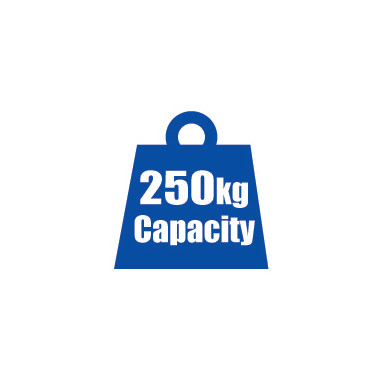
All sack trucks bear a symbol like the one pictured, which identifies the maximum load capacity. Loading more weight on the sack truck than is advised is dangerous for the user and can also cause damage to the truck, so make sure you consider this important factor when choosing yours. Our range features trucks with load weight capacities ranging from 0 to 500kg, so there’s a design to suit all load types.All sack trucks bear a symbol like the one pictured, which identifies the maximum load capacity. Loading more weight on the sack truck than is advised is dangerous for the user and can also cause damage to the truck, so make sure you consider this important factor when choosing yours. Our range features trucks with load weight capacities ranging from 0 to 500kg, so there’s a design to suit all load types.
Which type of foot-iron do you need?
.jpg)
The foot iron is the load plate found at the bottom of the sack truck, determining the load type and size the truck can carry. Contrary to popular belief, it is not true that the largest foot iron takes the largest single load. Larger foot irons do, however, allow the user to stack multiple items when needed, while classic slim foot irons allow for easy insertion beneath the item to be loaded.
You can also find dual foot-iron sack truck designs, which allow the user to switch between and accommodate different load sizes, while sack trucks with folding foot-irons allow for easier storage when the truck is not in use. The type of foot iron you need will depend on the type (or types) of loads you will need to transport and the amount of available storage space you have on your premises.

What sort of surface will the truck be used on?
A factor often overlooked is the type of surfaces your employees will use your truck on, which will significantly affect the type you should invest in. Sack trucks come with various wheel types, each designed to cope with use on different terrains. Use our table below to learn about the different wheel types and which terrains they are best for:
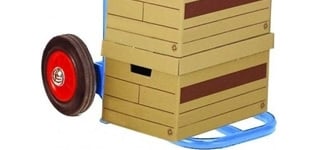 | 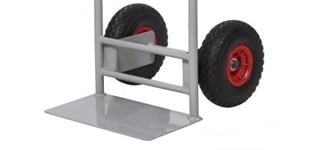 |
| Solid Rubber | Pneumatic |
| A general-purpose tyre that is suitable for use on flat ground. Solid rubber tyres will not puncture but do not offer the flexibility of a pneumatic tyre. | Provide smooth handling over kerbs and uneven ground, although can puncture like a bicycle tyre. |
A premium hard-wearing tyre choice that also provides smooth handling over the rough and uneven ground but will not puncture like standard pneumatic tyres.
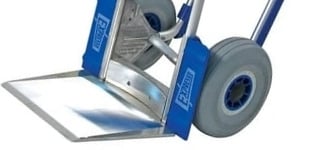 | 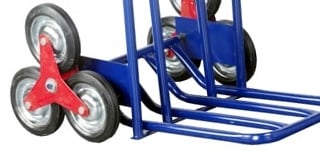 |
| Puncture Proof | Stair Climber |
| A premium hard-wearing tyre choice that also provides smooth handling over the rough and uneven ground but will not puncture like standard pneumatic tyres. | Stairclimber sack trucks fitted with start wheel configuration and hand trucks fitted with skids are designed especially for this purpose; again remember to check the capacity weight for use on a staircase. |
Will you require the sack truck to do several different jobs?

Suppose you must carry out several manual handling tasks but don’t want to buy multiple sack truck types; you can invest in a convertible sack truck for maximum versatility. Convertible sack trucks can be used in multiple positions and carry out various tasks. A 2-in-1 truck, for example, will work as a standard upright truck and a platform truck, you can also use a 3-in-1 sack truck (with the help of rear-wheel supports) at a 45-degree angle. They are ideal if you only have the space for one truck but need to do several different jobs.
Which handle type do you need?
Sack trucks come in various handle designs, each providing different ergonomic and practical benefits. Use our table below to identify the most common handle types found on sack trucks and which would best suit your needs:
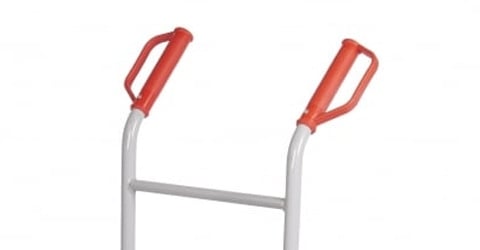 | 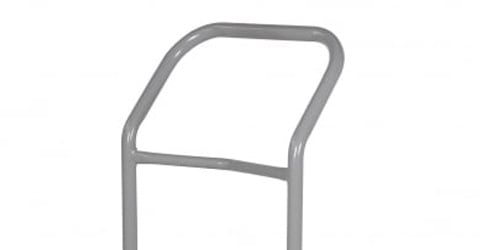 | 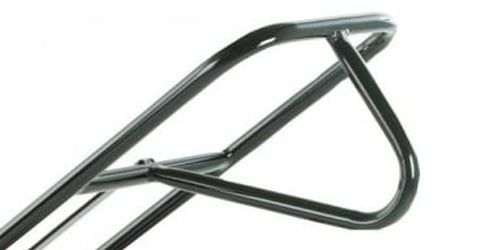 |
| Knuckle Guards | Loop Handle | ‘P’ Handle |
| Knuckle guards protect hands from the load. | Loops handles can be used single-handedly and are easier to pull over obstructions. | ‘P’ handle trucks are a variation of the loop handle and allow the truck to be loaded horizontally before being raised to the upright position. |
What is a sack truck used for?
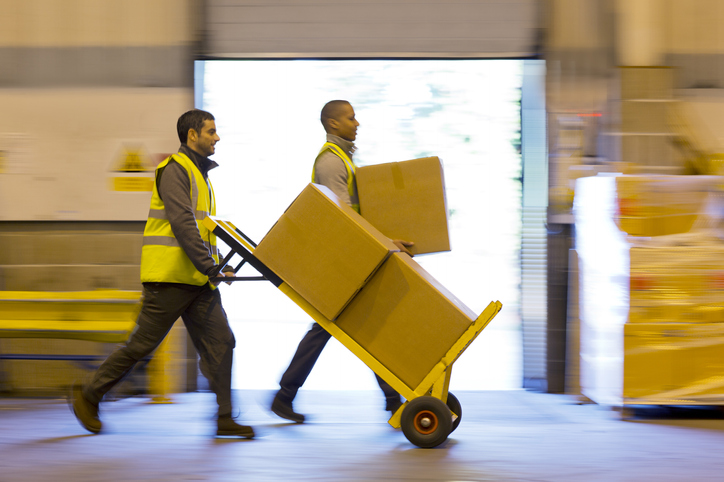
Sack trucks are used to move heavy items and products in warehouses, and within the manual handling sector, they are considered vital equipment. They make moving heavy loads easier and can help minimise the risk of injury for employees. A sack truck can manoeuvre loads across your warehouse and to varying heights depending on your demand. Sack trucks typically consist of a foot-plate, handle, and two wheels and the load is transported in front of the user to ensure the operator’s view is not obstructed.

Why is it called a sack truck?
The origins of sack trucks began in the 18th century and were used to move lack sacks of spices on docks. Young workers, from the age of 11 upwards, couldn’t lift heavy loads and began to use sack trucks to move the bags. This allowed them to move items at the same pace as their adult counterparts and where the equipment got its name as a ‘sack truck’.
What type of goods does a sack truck move?
Sack truck loads are dependent on industry and sack truck type. They are a multi-functional load carrier and can move a whole selection of items. Transportation companies can use sack trucks to move appliances, such as washing machines, dishwashers, fridge freezers and more, into customers’ homes. Other industries include the catering industry, which moves new stock, ale barrels, and more. In the logistics industry, sack trucks commonly move pallets filled with products or goods to be shipped to suppliers or customers.

How do you load a sack truck?
When loading a sack truck, there are a few things to consider that are important to ensure the safety of those operating and those in the surrounding area. Do not exceed the recommended weight load of the truck, as this can be dangerous. If you need to split the load and complete multiple trips, do this instead of overloading the sack truck. Stack the heaviest item at the bottom of the load and include lighter items on the top. This will ensure that the weight is closer to the ground and closer to the wheels, which means that you won’t have to lift it as high during the load, and it won’t fall from the truck and land on those passing by. You can add load restraints to the sack truck to ensure that your load stays in position for added security.
What are the benefits of using a sack truck?
Sack trucks have many benefits in the manual handling industry, including:
Increased productivity
When moving loads, you can increase the productivity of your workforce by using sack trucks. By stacking multiple loads on the sack truck (safely in compliance with the maximum weight load), your employees can save time and complete goods movement tasks more efficiently.
Increased safety
There’s less chance of injury when transporting goods using sack trucks, as the weight is not held by the individual moving the load and is instead secured to the sack truck. The transportation of goods through sack trucks reduces the risk of back injuries commonly found with heavy loads.
Choose a sack truck from PARRS today
Are you ready to choose your sack truck? Browse our full sack trucks range at PARRS and use the filters on the left-hand side to search our range by type, brand, foot-iron, weight capacity, wheel type, handle type and price.